
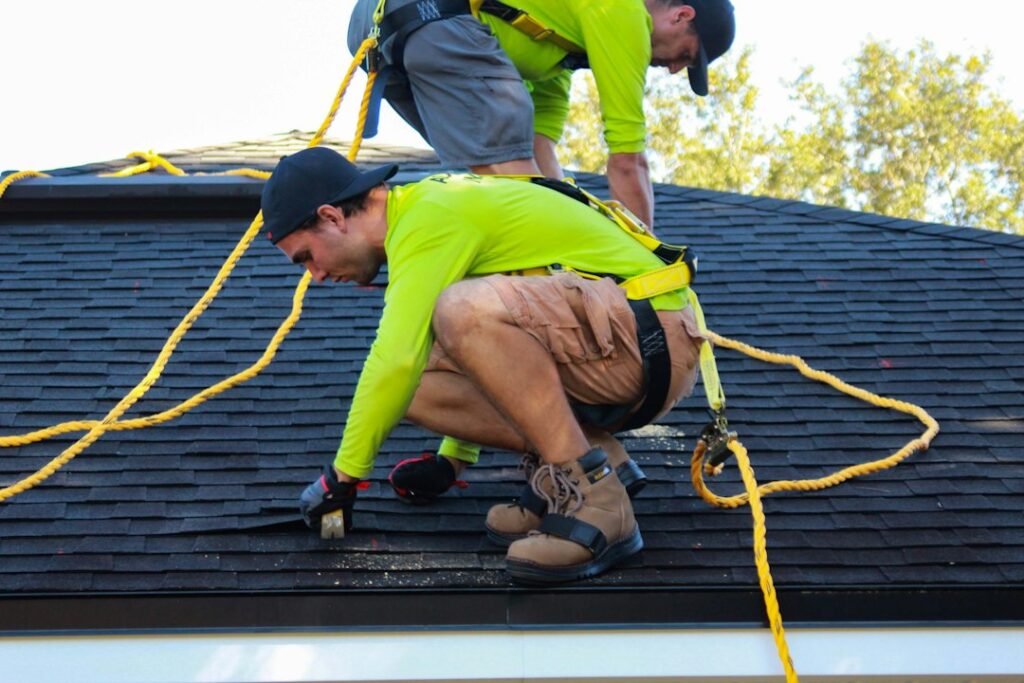
What does a roof warranty actually cover?
A roof warranty is a written promise about specific materials, installation work, or both. It does not automatically cover every leak, storm-related problem, or repair that occurs during the stated warranty period.
Most roofing coverage falls into three categories:
- Manufacturer’s warranty: Covers defects in roofing materials, such as shingles, underlayment, or certain accessories.
- Workmanship warranty: Covers installation errors made during the roofing project.
- Home warranty or service contract: May offer limited repair coverage for certain home systems, but it is separate from a roofing material or installation warranty.
The first step is identifying which type of warranty applies. A manufacturer may replace defective materials but exclude the labor needed to remove and install them. A workmanship warranty may cover installation-related leaks but exclude damage caused by falling branches, wind, ice, or poor attic ventilation.
Where can the warranty documents be found?
Start with the closing documents, roofing contract, invoices, inspection reports, and any paperwork provided after the work was completed. The warranty may be a separate document, a section of the contract, or a registration confirmation.
Look for:
- The date coverage began
- The person or property covered
- The roofing materials used
- The duration of coverage
- Whether coverage is transferable to a future owner
- The procedure for reporting a problem
- Labor and material exclusions
- Maintenance requirements
- Proration or reduced benefits over time
- Limits on repair costs or replacement value
If the documents are missing, the roofing contractor or material manufacturer may be able to provide a copy using the property address, installation date, invoice number, or product information. The available coverage cannot be determined reliably from a verbal statement such as “the roof has a lifetime warranty.”
Does “lifetime” mean the roof is covered forever?
No. “Lifetime” usually refers to the expected service life of the original owner’s material under the manufacturer’s stated terms. It does not necessarily mean the roof will be replaced at no cost whenever it develops a problem.
Lifetime warranties may include conditions such as:
- Coverage applying only to manufacturing defects
- Full benefits lasting for a limited initial period
- Reduced or prorated benefits afterward
- Required registration
- Installation by an approved or certified contractor
- Exclusion of labor, tear-off, disposal, flashing, or related repairs
- Coverage ending or changing when the home is sold
The exact language matters more than the label. A warranty that says “limited lifetime” may provide less coverage than a shorter warranty with broader labor and installation protection.
How can a homeowner tell whether a leak is covered?
The likely cause of the problem is more important than the location of the leak. Water appearing on a ceiling does not prove that the roofing material failed.
A covered issue might include:
- Shingles that were defective when manufactured
- Premature granule loss caused by a material defect
- Improperly installed flashing
- Incorrect fastening
- A failed seal caused by installation
- Missing or improperly installed roofing components
A claim may be denied when the damage results from:
- Wind, hail, falling limbs, or other weather events
- Ice dams or heavy snow loads
- Animals or pests
- Condensation or inadequate attic ventilation
- Alterations made after installation
- Walking on or damaging the roof
- Lack of ordinary maintenance
- A pre-existing structural or drainage problem
A leak near a chimney, wall, skylight, or roof penetration can involve flashing rather than the shingles themselves. Likewise, moisture in an attic during a cold Groton winter may come from indoor humidity and condensation instead of a roof defect.
What local conditions can affect warranty coverage?
Seasonal weather can complicate a roof claim. Freeze-thaw cycles can enlarge small openings, while wind-driven rain, snow accumulation, ice, and falling branches can create damage that a material warranty excludes.
Older homes may also have conditions that are outside a roofing warranty, including:
- Sagging roof decks
- Inadequate attic ventilation
- Deteriorated fascia or soffits
- Older chimney flashing
- Improper drainage around additions
- Multiple roof layers
- Uninsulated or poorly insulated attic areas

A warranty generally covers the item or work described in the document, not every building condition that affects roof performance. If the roofing contract excluded deck replacement or structural repairs, those exclusions may matter when a problem is investigated.
What should be checked before filing a claim?
Document the problem promptly, but avoid making permanent repairs before the responsible party has had a reasonable opportunity to inspect the condition. Temporary measures may be necessary to prevent interior damage, particularly during active rain or snow, but keep receipts and photographs.
Useful records include:
- Wide and close-up photographs
- The date the problem was discovered
- Weather conditions around the time of the damage
- Interior water stains or damaged finishes
- Attic moisture, insulation, or ventilation conditions
- Copies of the contract and warranty
- Repair invoices and maintenance records
- Notes from inspections or conversations
Do not assume that a warranty claim covers interior damage. Many roof warranties address the roof itself but exclude drywall, paint, flooring, furniture, and personal belongings. Homeowners insurance may treat sudden storm damage differently from a long-term maintenance issue, so the warranty and insurance policies should be reviewed separately.
How should a warranty claim be submitted?
Follow the notice procedure written in the warranty. Some documents require notice within a certain period, while others identify a specific manufacturer, installer, or claims department.
A written claim should briefly state:
- The property address
- The installation date, if known
- The roofing materials involved
- The date and location of the problem
- The apparent symptoms
- The requested inspection or remedy
- The documents and photographs attached
Keep copies of everything submitted. If the claim is denied, request the reason in writing and ask which warranty provision supports the decision. A denial based on “wear and tear” is not the same as a denial based on storm damage, installation error, or an excluded building condition.
What protections apply to roofing contracts in New York?
For home-improvement work costing more than $500, New York generally requires a written contract. The agreement should identify the work, materials, price, approximate schedule, and other key terms. The warranty language should be reviewed before work begins rather than relying on a promise made during a sales conversation.
A useful contract should clarify:
- Whether the warranty covers materials, labor, or both
- Who is responsible for filing manufacturer claims
- Whether flashing and ventilation work are included
- How emergency leaks are handled
- Whether the warranty transfers to a buyer
- What maintenance the homeowner must perform
- Which conditions are specifically excluded
Spoken promises can be difficult to prove later. If a warranty is described as covering a particular repair, material, or period, that promise should appear in the written contract or warranty document.
What is the most practical way to assess coverage?
Use this sequence:
1. Identify the document that may provide coverage.
2. Confirm the installation date and warranty period.
3. Determine whether the problem concerns materials, workmanship, weather, maintenance, or another building component.
4. Read the exclusions and maintenance requirements.
5. Photograph and document the condition.
6. Notify the correct party using the required procedure.
7. Request a written explanation if coverage is denied.
8. Compare warranty coverage with the homeowners insurance policy.
The central question is not simply, “Is the roof under warranty?” It is, “Which part of the roof failed, what caused the failure, and does the written warranty cover that cause and type of repair?”
