
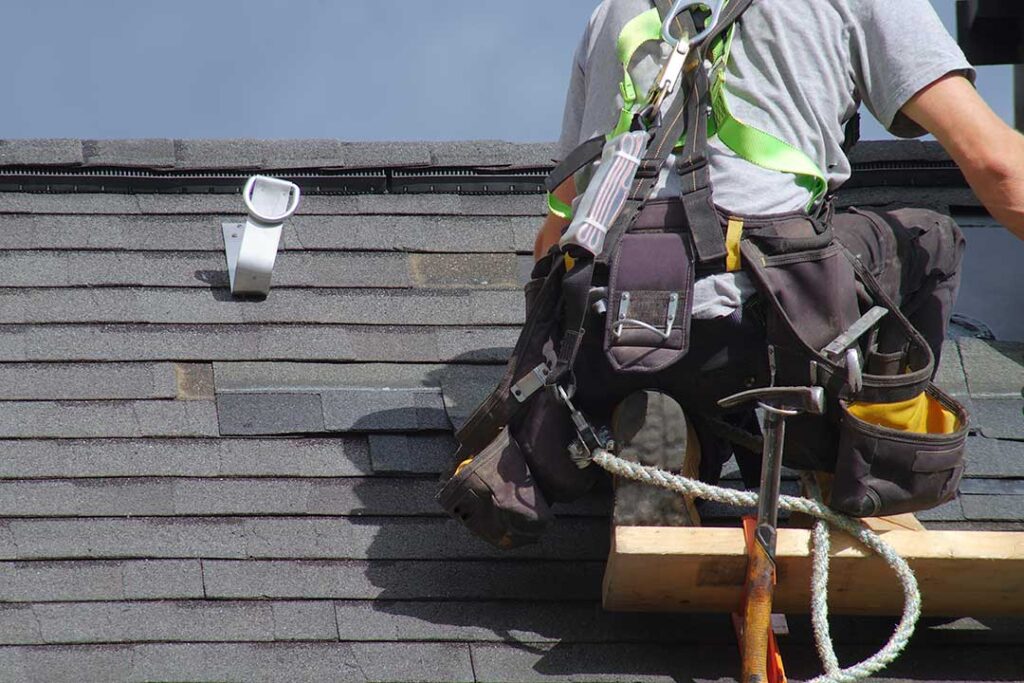
Roof damage becomes an emergency when water, wind, snow, or structural problems threaten the people or contents inside a home. The safest response is to control immediate risks, limit interior damage, document what happened, and avoid temporary repairs that create additional hazards.
What counts as an emergency roof problem?
A roof issue needs prompt attention when it allows active water entry, exposes the interior, creates a falling-object hazard, or suggests that part of the roof may be unstable.
Common examples include:
- A large section of shingles or membrane torn away by wind
- Water running through a ceiling or wall
- A tree limb that has penetrated the roof
- A visibly sagging roof deck or ceiling
- Missing flashing around a chimney, vent, or roof edge
- A skylight or roof vent damaged during a storm
- Heavy ice or snow associated with unusual cracking, movement, or structural distress
- Electrical fixtures, outlets, or wiring affected by a roof leak
A few damp spots after light rain may not require the same response as an active ceiling leak, but delaying all action can allow insulation, drywall, framing, and personal belongings to absorb more water.
What should be done first?
Start with people and electrical safety, not the roof itself. Move household members away from leaking ceilings, sagging areas, broken skylights, and rooms where debris may fall.
If water is near a light fixture, outlet, appliance, or electrical panel, turn off power to the affected area only if the shutoff can be reached safely from a dry location. Do not step into standing water to reach a switch. If there is sparking, smoke, a burning odor, or significant electrical damage, leave the area and seek emergency assistance.
Place containers under active drips and move furniture, electronics, documents, and other valuables away from the affected area. A plastic sheet can protect belongings, but it should not be pressed against a bulging ceiling. A water-filled ceiling may collapse without warning.
Should a homeowner climb onto the roof?
In most emergency situations, no. Wet shingles, ice, steep slopes, loose materials, and hidden structural damage make roof access especially dangerous.
Winter conditions in Groton can combine snow, freezing rain, thawing temperatures, and strong winds. A roof that appears stable from the ground may have weakened decking beneath the surface. Snow removal, ice removal, and tarp installation are not safe do-it-yourself tasks when ladders, steep surfaces, or structural damage are involved.
A ground-level inspection is more appropriate. Look for missing roofing materials, pieces of shingles in the yard, displaced gutters, exposed underlayment, broken branches, or water stains inside. Use binoculars or photographs taken from the ground rather than attempting to inspect a damaged area directly.
How can temporary water control be handled safely?
Temporary protection should be installed only from a safe location and only when the roof is stable enough for the work. A tarp may reduce additional rain entry, but an improperly secured tarp can tear loose, damage siding, block drainage, or become a windborne object.
Do not cover an area if:
- The roof is sagging or visibly shifting
- A tree or large limb remains on the structure
- There are exposed electrical components
- Ice makes the surface or ladder unstable
- The damaged area is close to a chimney, utility line, or steep edge
- The ceiling or roof framing appears close to collapse
Avoid using roofing cement, expanding foam, tape, or household caulk as a substitute for a proper emergency repair. These materials may conceal damage, trap moisture, or make later repairs more difficult. A bucket, plastic sheeting over belongings, and controlled water collection are often safer than attempting a risky exterior patch.
What if snow or ice is involved?
Snow and ice should not be removed from a roof simply because they are visible. The weight of accumulated snow varies with moisture content, and ice can add weight unevenly around roof edges, valleys, and low areas.
Warning signs that require caution include:
- New ceiling cracks
- Doors or windows that suddenly stick
- Unusual popping, creaking, or cracking sounds
- A roofline that appears lower or uneven
- Interior walls separating from ceilings
- Sagging near a roof valley or exterior wall
- Water appearing around ceiling fixtures
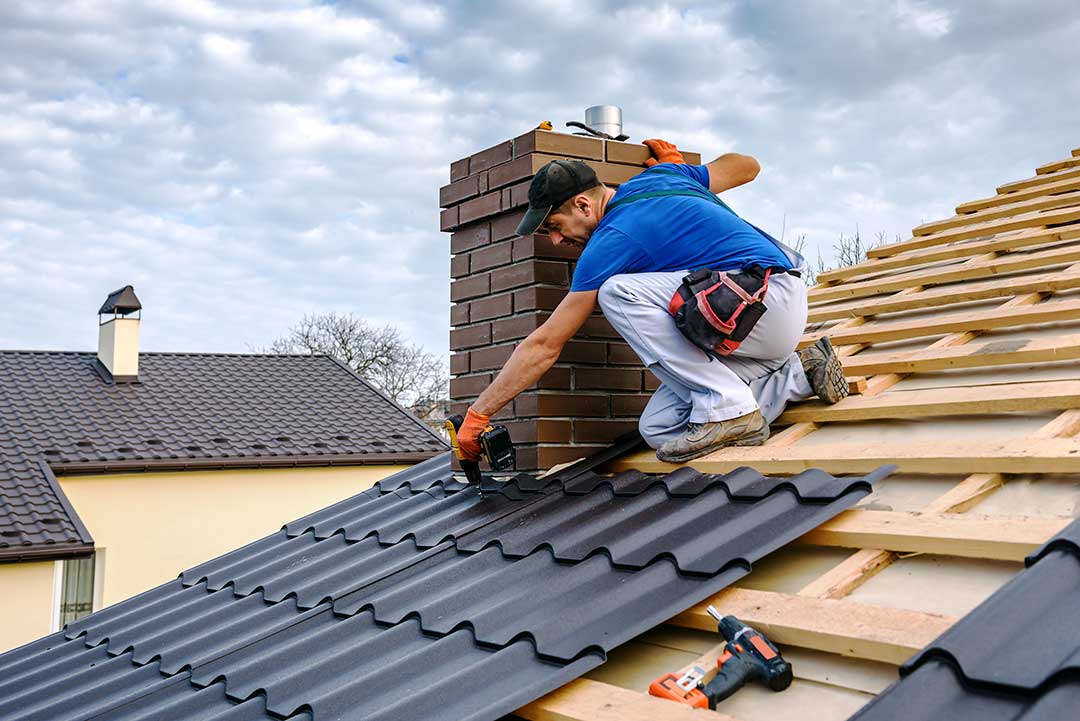
Do not chip ice with a hammer or shovel. This can damage shingles, flashing, gutters, and the roof deck. Do not use open-flame devices or heat sources to melt ice. If snow or ice may be contributing to structural stress, keep people away from the affected area and arrange for a safe assessment.
Ice dams can cause water to back up beneath roofing materials, especially after repeated freeze-thaw cycles. The visible leak may occur several feet away from the actual entry point, so drying the ceiling alone does not solve the problem.
How should storm damage be documented?
Take photographs and short videos from safe interior and ground-level locations. Record:
- The date and approximate time the damage was discovered
- Weather conditions, such as high wind, heavy rain, hail, or freezing precipitation
- Rooms affected by water
- Damaged ceilings, walls, flooring, and belongings
- Missing or displaced roofing materials visible from the ground
- Any temporary steps taken to contain water
Keep receipts for emergency materials, water removal, and related damage control. Insurance policies differ, so documentation should be reviewed before damaged materials are discarded whenever conditions allow. If a fallen tree or branch is involved, photograph the roof, tree, surrounding area, and any apparent point of impact.
Can a roof be repaired during bad weather?
Some emergency measures can be performed during poor weather, but permanent roof work may need to wait until conditions are safe and surfaces are dry enough for proper installation. Shingles, sealants, underlayment, and flashing may not perform correctly when installed on icy, wet, or excessively cold surfaces.
A temporary repair is intended to stop or reduce immediate water entry. It is not necessarily evidence that the roof has been restored. After the weather improves, the damaged area should be checked for wet insulation, deteriorated sheathing, loose fasteners, displaced flashing, and hidden damage around roof penetrations.
Are permits needed for emergency roof repairs?
Minor emergency work intended to prevent additional damage may be treated differently from reroofing or structural reconstruction. However, requirements can depend on the scope of work, the property, and whether roof covering, framing, or other building components are being replaced.
In Groton, residents should verify local requirements before beginning substantial repair or replacement work. New York’s building regulations generally require roof replacement and related alterations to meet applicable code provisions. Emergency conditions do not automatically make permanent work exempt from those requirements.
When is outside help necessary?
Professional assistance is warranted when the roof is unstable, the damage involves structural members, a large opening is exposed, electrical systems are affected, or safe access cannot be established. It is also appropriate when the source of a leak is unclear or when water has entered insulation, walls, or multiple rooms.
The most useful information to provide is the location of the leak, whether water is actively entering, what caused the damage if known, the type of roof if apparent, and whether snow, ice, a tree limb, or electrical hazards are present.
Emergency roof repair is mainly a damage-control problem. Keep people clear of unsafe areas, contain water from inside, avoid climbing onto a compromised roof, document conditions carefully, and treat temporary protection as a short-term measure rather than a complete repair.
